Metal costs more up front, lasts roughly twice as long, and shrugs off our sun — but large hail dents it (cosmetic damage some insurers exclude). Architectural shingles cost less, install faster, and Class 4 impact-rated versions handle hail well. Staying 15+ years favors metal; selling sooner favors shingle.
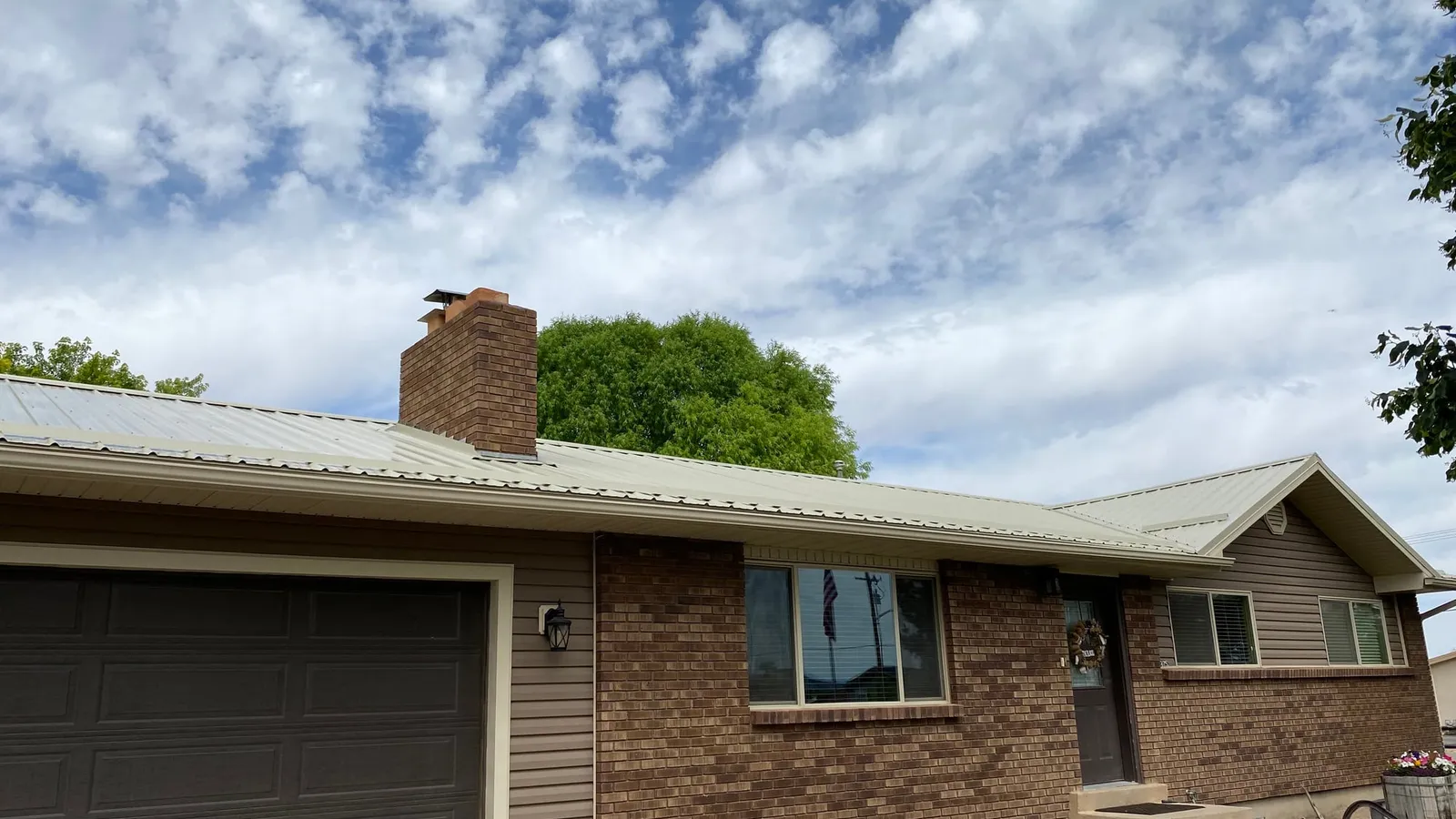
We install both, so this isn’t a pitch for either. Metal and asphalt shingle are both good roofs on the Western Slope — but they age differently in our specific conditions, and the right answer depends mostly on how long you’re staying under it.
Asphalt shingle is the value play: lower cost, one-day installation, and modern Class 4 impact-rated shingles handle hail well. Metal is the longevity play: it lasts roughly twice as long and is nearly immune to the UV aging that kills shingles here — but it costs meaningfully more up front, and hail dents it, which brings some insurance fine print.
At our elevation, UV exposure is the thing that actually ages roofs. It dries out asphalt shingles until they curl, crack, and shed granules — it’s why Western Slope shingle roofs age faster than the same product at sea level. Metal doesn’t care. Its finish can fade over decades, but the panel itself doesn’t get brittle. If you’ve watched a shingle roof on a south-facing slope go gray and curly, you’ve seen the difference UV makes.
Here’s the part that surprises people. Shingle: hail bruises and cracks shingles — functional damage that insurance typically covers, and Class 4 shingles resist a lot of it. Metal: hail rarely punctures a metal roof, but large stones dent it. The catch is that many insurers classify dents as cosmetic damage — and some policies carry a cosmetic-damage exclusion for metal roofs, meaning a hail-dented (but watertight) metal roof may not be a covered loss. If you’re considering metal here in hail country, check your policy for that exclusion before you sign anything. It’s a conversation worth having with your agent, not a reason to rule metal out.
Metal sheds snow fast (good for the roof, worth planning for above doorways — snow guards solve it). Shingle holds snow longer but has no slide-off issue. In wind, a properly installed version of either performs well; wind failures on shingle roofs are usually installation or age problems, not product problems.
Metal costs more up front — typically a multiple of shingle, not a rounding error. Whether it’s worth more depends on your horizon:
We break down what drives roof pricing in the Grand Valley on our roof cost guide.
Two factors that don’t fit a durability table but decide real choices: resale timing and solar plans. If you’re likely to sell within five years or so, the market rarely pays back metal’s premium — buyers price “good roof,” not “great roof,” and a newer Class 4 shingle roof checks that box for less. Stay ten or more and the math flips, because you’ll actually live through the years metal is buying. On solar: panels on a shingle roof mean dozens of sealed penetrations, and a roof that will need replacing under the array someday — a real cost people discover late. Panels clamp onto standing seam with zero holes, and the roof outlives the panels. If solar is anywhere in your plans, that alone can settle this comparison. And if you’re genuinely torn, that’s what side-by-side estimates are for — same roof, both systems, real numbers instead of a table’s generalities.
The pattern we see: homeowners planning to stay for decades — or eyeing solar, which clamps to standing seam without a single roof penetration — pick metal and stop thinking about roofs. Homeowners optimizing cost-per-year in hail country pick Class 4 architectural shingle and come out ahead on insurance. And on shops and outbuildings, Tuff Rib metal wins almost by default. None of those choices are wrong; they’re different bets on time.
Depends on the house — which is the honest answer. A forever home with a big south-facing exposure: metal. A family home we might sell in eight years: Class 4 architectural shingle. If you want to talk through your specific roof, sun exposure, and timeline, the conversation is free.
The inspection is free, and we photograph everything we find.