There is no honest average — size, pitch, material, deck condition, and code items swing the number too far. What's uniquely Colorado: hail drives many replacements through insurance (where your real cost is your deductible), Class 4 shingles can earn premium discounts, and percentage deductibles are changing the math. Judge any bid by its itemized scope, not its bottom line.
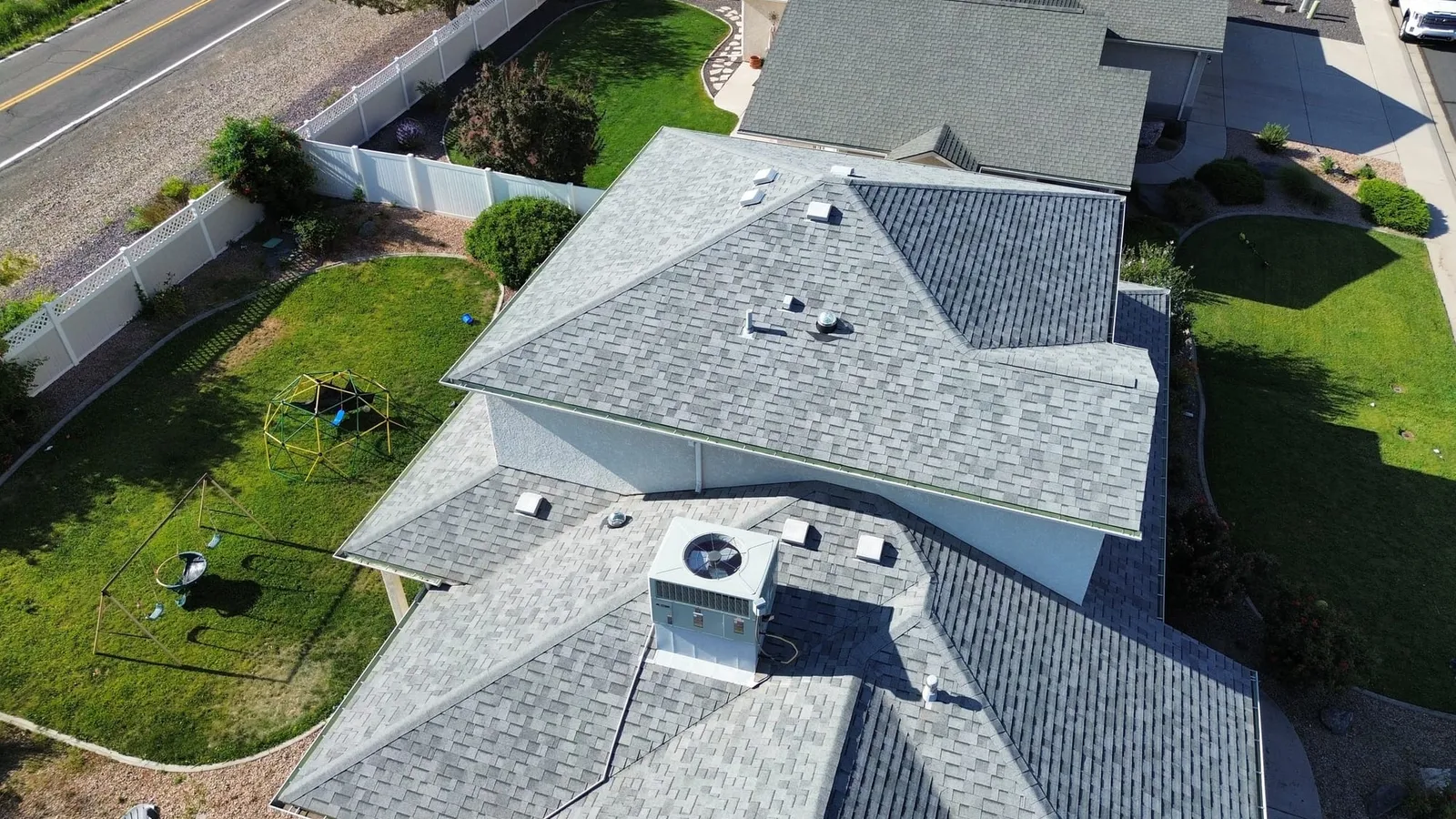
Type this question into Google and you’ll get a wall of confident numbers — none of which came from a roof in Colorado, let alone yours. Here’s the honest version of the answer, from a crew that measures real roofs here every week: what actually sets the price, what’s different about Colorado, and how to tell whether a bid is fair without taking anyone’s word for it.
Those averages blend states, materials, roof sizes, and labor markets into one number that describes almost nobody’s house. Two homes on the same street can be very different jobs: one is a simple gable roof you can walk, the other is cut up with valleys, dormers, and a skylight on a slope steep enough to need ropes. Same neighborhood, same shingle — very different price. Any number you read before someone has measured your actual roof is a guess wearing a costume.
Roofing is measured in squares — one square is 100 square feet of roof surface. A real bid starts with your square count, adds a waste factor for cuts and ridges, then layers in tear-off and disposal, materials, labor, and the fixed costs of doing it right: permits, dumpsters, site protection. Two useful things fall out of that. First, roof area isn’t house area — a steep, complex roof over a modest house can carry more squares than a big simple ranch. Second, a dramatically cheap bid can’t shrink the price of shingles, so it’s almost always shrinking labor quality or scope. Our Grand Junction cost guide walks the full bid anatomy.
If a storm did the damage, quite possibly — and then the entire cost question changes shape. On an approved claim, the insurer pays the approved scope and your real out-of-pocket cost is your deductible. Two Colorado-specific things to know: contractors here are legally barred from covering or waiving that deductible (anyone offering is proposing insurance fraud), and many policies have quietly moved to percentage-based wind and hail deductibles — a share of your home’s insured value rather than a flat figure, which can be a much bigger number than homeowners expect. Check your declarations page before storm season, not after. The full process is in our claims walkthrough, and the decision framework is in should you even file?
When bids differ widely, the roof didn’t change — the scope did. The cheaper bid is usually quieter about what it excludes: how many layers of tear-off it includes, whether there’s any allowance for replacing bad decking (there’s almost always some), ice-and-water shield where our freeze-thaw demands it versus the code minimum, upgraded underlayment or the bargain roll, disposal fees, and what the workmanship warranty actually covers in writing. Line the bids up item by item and the “expensive” one is often the only complete one. A bid that’s vague about scope isn’t cheaper — it’s just billing the difference later, mid-job, when you can’t say no.
You don’t need a benchmark number; you need an itemized scope. A fair Colorado bid puts all of this in writing:
Compare bids on that scope, line by line. If one is dramatically lower, find the line that’s missing — it’s in there somewhere. Our guide to choosing a roofer covers the rest, including the ten questions that expose a thin bid in about five minutes.
Two honest paths. If your shingles still have life left, APX Roof Renew can extend them for far less than a replacement — it’s the middle option most homeowners don’t know exists. And if replacement really is the answer, financing through Acorn’s marketplace spreads the cost with a soft credit check to see real offers. Get the estimate first either way, so you’re deciding with a real number instead of an internet average.
A free, no-obligation inspection gets you an honest read on your actual roof: what shape it’s in, whether a storm did compensable damage, and a written, itemized number for your house — not a state average. If the roof is fine, we’ll tell you that too. That’s the whole point.
The inspection is free, and we photograph everything we find.