Most hail damage can't be seen from the ground — but the evidence can. Check your gutters for granules, the yard for shingle pieces, the roofline from across the street, and any metal you can reach for dents. Water stains inside mean call now. Spot any of it? The on-roof inspection is free.
After a hailstorm rolls across the Western Slope, the first question every homeowner has is the same: did it get my roof? The honest answer is that most hail damage can’t be seen from the ground — but the evidence it leaves behind usually can. Here’s what to look for from your driveway, no ladder required.
Before anything else: don’t climb up there. A hail-hit roof can have loose granules underfoot, and nothing below is worth a fall. Everything in this article can be checked from the ground or from inside your house — and the part that can’t is exactly what a free inspection is for.
Hail knocks the protective granules off asphalt shingles, and rain washes them straight into your gutters. After the storm, look where your downspouts drain — piles of dark, sand-like grit are one of the most reliable ground-level signs of shingle damage.
Cracked or torn shingles often shed fragments. Whole tabs in the yard after high wind, or torn corners near the fence line, mean the roof took a real hit.
Walk across the street and look at the roof edge-on. Lifted, curled, or missing shingles show up in silhouette — especially in morning or evening light, when shadows exaggerate anything that isn’t lying flat.
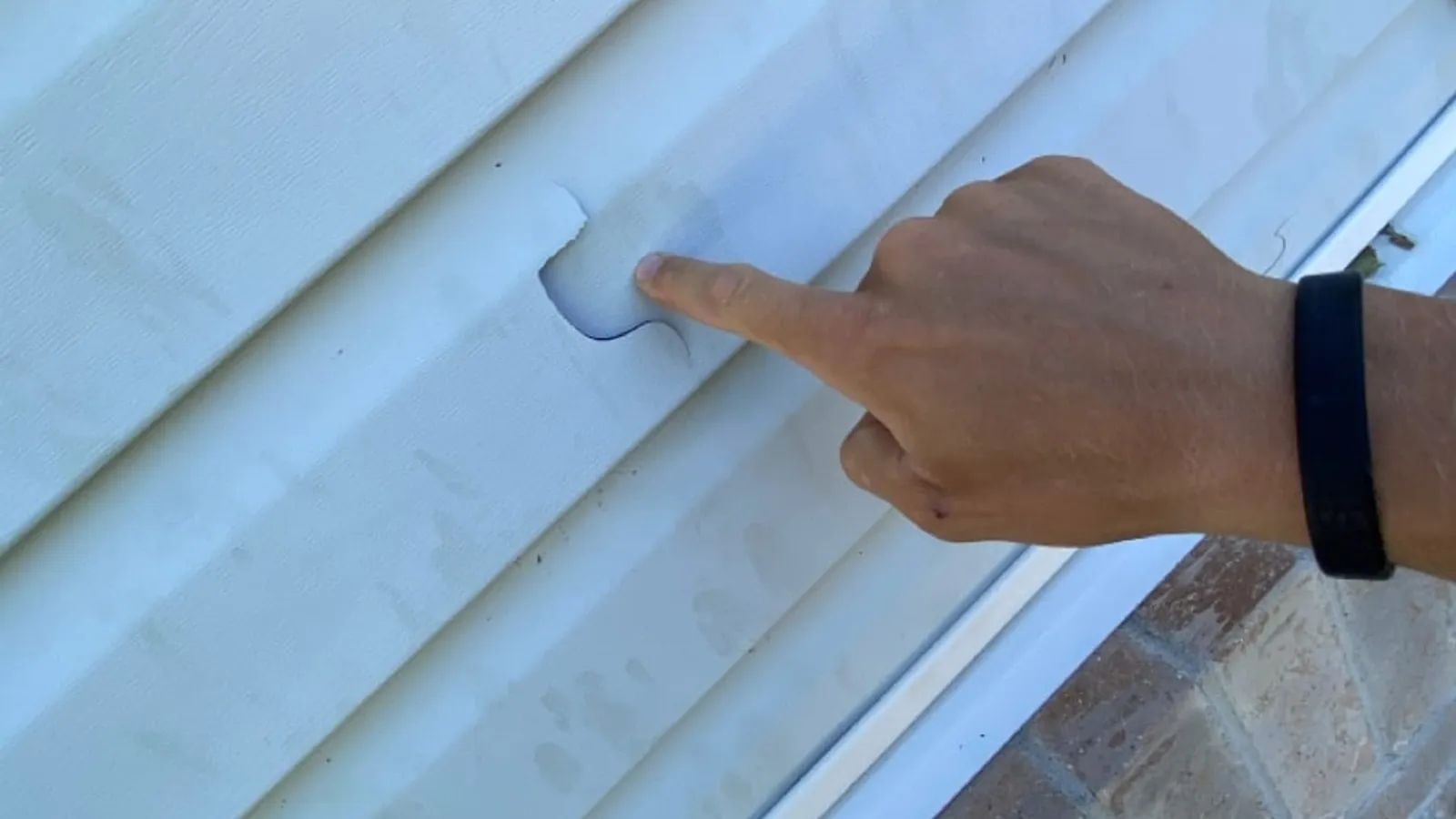
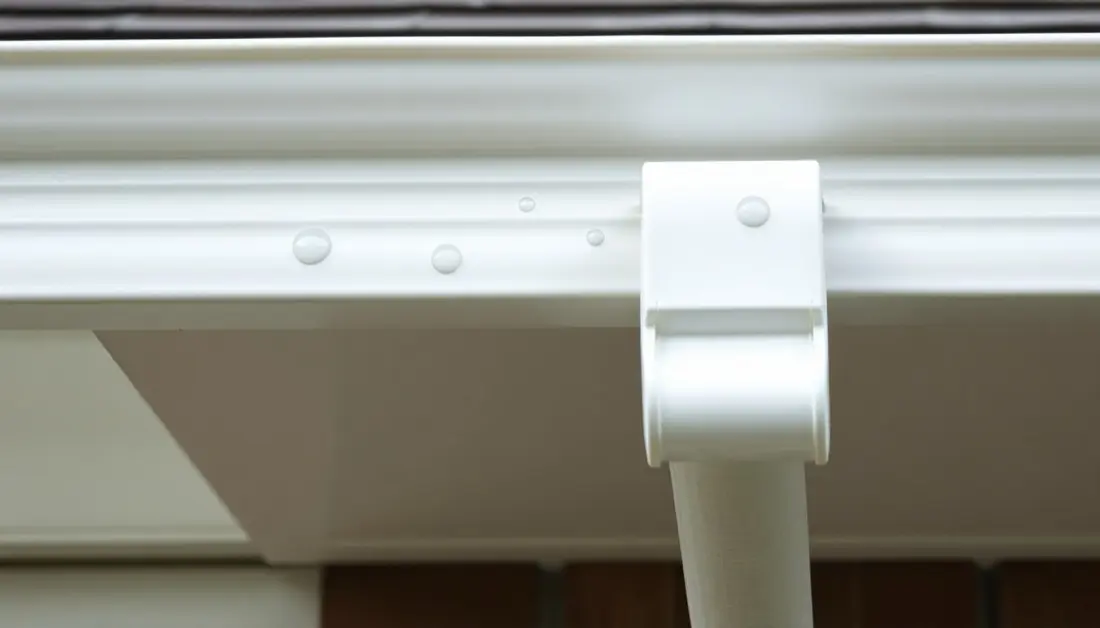
Gutters, downspouts, and window wraps are softer than shingles and dent visibly. If the hail dented metal at eye level, assume it did at least that much on the roof.
Water stains on ceilings, damp spots in the attic, or a musty smell upstairs after a storm mean water is already getting through. That one’s not a maybe — call someone now.
Most hail damage isn’t visible from the ground — but the evidence it leaves behind usually is.
The most common hail damage is a bruise — a soft spot where the impact crushed the shingle’s mat without tearing it. Bruises are nearly invisible from below, and they’re exactly what an adjuster looks for later.
That’s why a documented, on-the-roof inspection matters even when things look fine from the driveway.
If we get up there and the roof is fine, that’s what we’ll tell you — with the photos to prove it. And if it isn’t, you’ll have the documentation your insurance claim needs, dated and organized, from the first look. Ten minutes in the driveway, one phone call, and you’ll know where your roof actually stands — which beats wondering every time the sky turns green.
Put the five checks together and you have a routine that takes less time than making coffee. Start at the downspout exits and look for granule piles. Circle the house scanning the yard and fence line for shingle pieces. Cross the street and sight the roofline edge-on from two corners — morning or evening light is best. On the way back, run your eyes down every piece of metal you pass: gutters, downspouts, window wraps, the mailbox if it took hail too. Finish inside with a slow look at the upstairs ceilings. If you own binoculars, they turn the across-the-street scan from “silhouette check” into a real inspection — creased tabs, displaced granule patches, and dinged vents all show up from the sidewalk with eight-power glass. It’s the closest thing to being on the roof without leaving the ground, and it’s exactly how we do a first pass on steep roofs we haven’t rigged yet.
Do it the same day as the storm if you can. Evidence is freshest before the next rain rinses granules down the storm drain — and before the neighborhood fills with out-of-town sales crews whose “free inspections” come with a contract attached.
Whatever you spot, photograph it with your phone — the pictures are automatically dated, which matters later. Get the granule piles, the dented downspout, the shingle chunk by the fence, the ceiling stain. You’re not building the insurance file yourself; you’re preserving the “day one” record that makes the professional documentation stronger. Then get the free on-roof inspection scheduled while the storm date is still fresh in everyone’s mind. If we find enough damage to matter, your photos and our photos together make a claim adjusters take seriously — and whether to actually file is a decision you’ll get to make with real information instead of a salesman’s urgency.
There’s a persistent myth that you have seven days to report hail damage. You don’t — but you do have a policy deadline, commonly a year (sometimes two) from the storm date, and waiting has real costs: damage compounds, memories of the storm date fade, and a roof with months-old hail bruises plus fresh wear is harder to document cleanly than one inspected the same week. If you saw any of the signs above, the free inspection is worth doing while the evidence is crisp — and whether to actually file is its own decision, which good documentation makes far easier.
After a real hail event, out-of-town crews sweep neighborhoods telling every homeowner their roof is totaled. Sometimes they’re even right — that’s what makes it work. The tell isn’t the claim, it’s the pressure: a legitimate finding survives a second opinion, and a roofer who needs you to sign today is telling you something. Take the flyer, then vet anyone you’re considering — including us — before letting anyone on your roof.
The inspection is free, and we photograph everything we find.