Watch for: curling or cupping shingles, bare spots where granules used to be, cracked or rusted flashing, shingle pieces in the yard, sagging rooflines, daylight or damp in the attic, and ceiling stains. The first three are 'schedule an inspection'; the last three are 'call this week.'
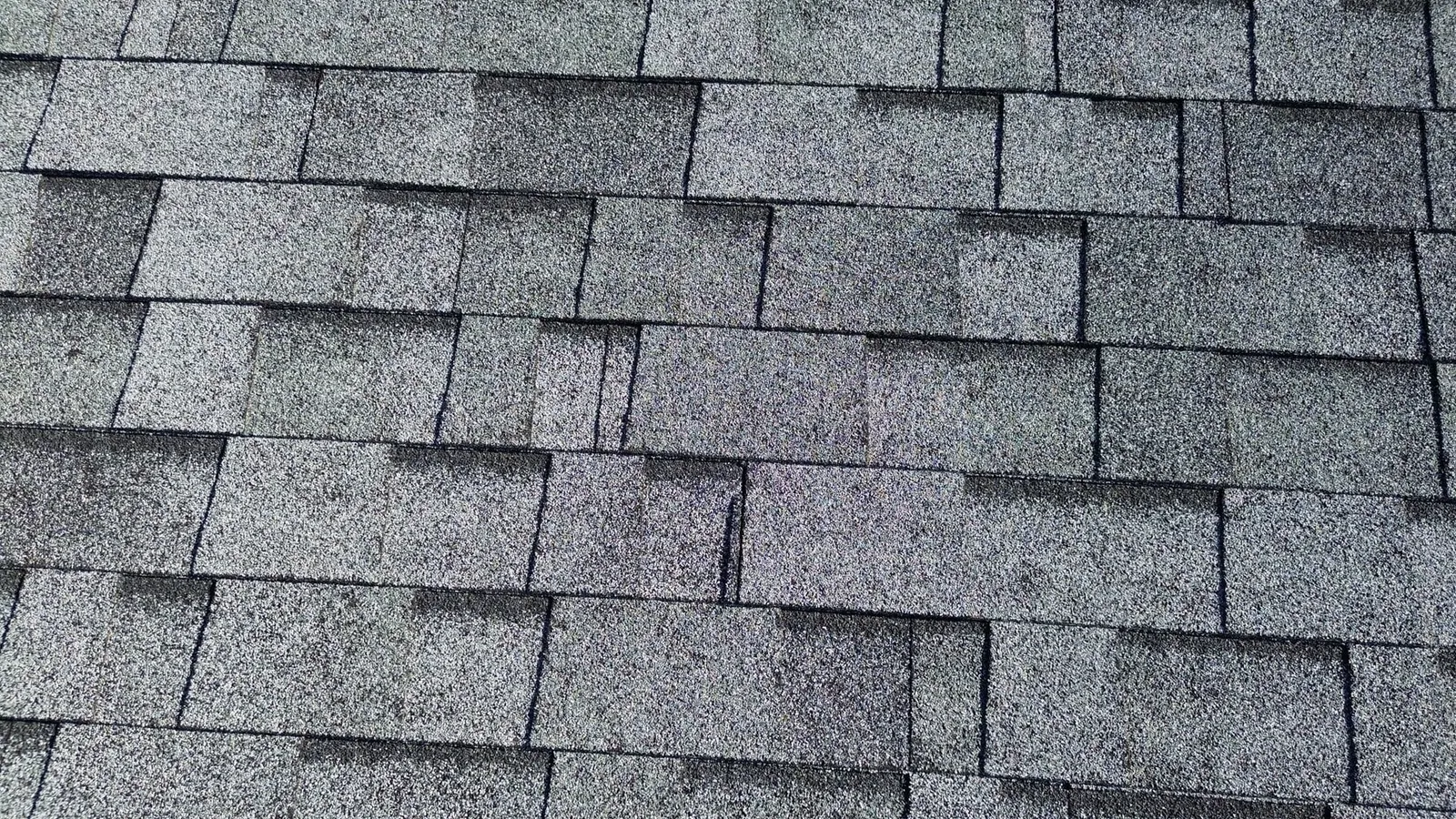
Roofs rarely fail all at once. They send warnings — usually for months — and the difference between a repair and a replacement often comes down to whether anyone was watching. Here are the seven signs we look for, what each one actually looks like, and how urgent each one is — plus two indirect ones that are easy to miss.
Shingle edges that curl upward (cupping) or corners that turn down and lift (clawing) mean the shingle has dried out and shrunk — a normal part of aging that our high-altitude sun accelerates. A few curled shingles on a sun-baked slope can be repaired; curling across the whole roof means the clock is running.
Urgency: schedule an inspection.
The granules are the shingle’s sunscreen. When they go, you’ll see dark, shiny bare patches on the roof — and sand-like piles in the gutters and at downspout exits. Some granule shedding is normal on a new roof; on an older roof it means the shingles are wearing through.
Urgency: schedule an inspection.
Flashing is the metal that seals the roof’s most vulnerable spots — chimneys, vents, skylights, and valleys. Rust streaks, visible gaps, or sealant that’s pulled away are the leading cause of leaks on roofs whose shingles are otherwise fine. This is the classic small-repair-now versus big-repair-later item.
Urgency: schedule an inspection.
Whole tabs after a windstorm, torn corners along the fence line, or fragments in the flower beds mean the roof is actively losing material. Every missing shingle is a spot where the underlayment is doing a job it wasn’t meant to do for long.
Urgency: call soon — before the next storm.
Stand across the street and sight along the ridge. It should be straight. A dip or wave in the roofline suggests the decking underneath has been wet long enough to soften — which means water has been getting in for a while.
Urgency: call this week.
Go up on a bright day and turn off the light. Pinpoints of daylight through the roof deck, damp insulation, or a musty smell all mean the envelope is open. Attic checks catch problems a curbside look never will.
Urgency: call this week.
Brown rings on the ceiling or streaks down an interior wall are the last warning, not the first — by the time water shows inside, it’s been traveling through the roof system for a while. Photograph the stain (phone photos are dated) and watch whether it grows after the next rain.
Urgency: call now.
Neither of these is a roof symptom on its own, but each one has sent us up a ladder that found something real.
A roof problem can show up on a utility bill before it shows up on a ceiling. When attic ventilation fails or insulation gets wet, upstairs rooms run hot, the AC works overtime, and July bills climb. It’s indirect evidence — but paired with any sign above, it’s worth having the attic looked at along with the roof.
Subdivisions get built together and age together. When roofing crews start appearing on your street, it’s usually because the whole block’s roofs are reaching the same point in the same curve — and because one storm pushed the marginal ones over. You don’t need to panic-buy a roof because the neighbor did; you do want to know where yours sits. That’s a free inspection, not a commitment.
Honesty cuts both ways, so here’s what usually doesn’t mean trouble. Black streaks running down a slope are typically algae — cosmetic, common on north faces, and not a leak risk. A light sprinkle of granules from a brand-new roof is normal shedding, not failure. One hairline crack in one shingle on an otherwise healthy roof is a note for the next inspection, not a reason to lose sleep. And moss — rare in our dry climate — matters in shaded pockets but isn’t the crisis it is in wetter states. If a door-knocker points at any of these and says “totaled,” get a second opinion before you sign anything.
A routine worth doing each spring and fall: stand across the street and sight the ridge (straight?), scan the slopes for curling or dark patches, check the downspout exits for granule piles, look up at the ceilings of the top floor, and — if you have attic access — glance for daylight or damp insulation with a flashlight. Five minutes, no ladder, and it catches the majority of problems on this list while they’re still small ones. Put a reminder on your phone for April and October and the routine runs itself — most of the expensive roof stories we hear started with several years of nobody looking.
None of these signs mean your roof is done — most mean a repair, not a replacement. The economics only turn against you when small problems get years to work: a lifted shingle becomes wet decking, wet decking becomes a soft spot, and a soft spot turns a simple repair into carpentry. Every season a known problem waits, the eventual fix gets bigger. The cheap version of roof ownership is boring: look early, fix small.
One sign from the top of this list is maintenance. Two or three signs, or anything from the bottom half, deserves a professional look — and ours is free, with photos of everything we find, whether the answer is a “you’re fine,” a repair, or a bigger conversation.
The inspection is free, and we photograph everything we find.